Screened In Porch Ideas for San Antonio Homes
Central Texas summers push homeowners indoors just when the backyard looks its best. A screened-in porch solves that problem by keeping bugs, pollen, and harsh sun outside while letting the breeze in. Below, explore screened in porch ideas that work specifically for San Antonio’s climate, lot sizes, and outdoor living style, along with the design, screening, and furnishing decisions that shape a comfortable finished space.
Why Add a Screened Porch to Your San Antonio Home
San Antonio homeowners deal with mosquitoes, oak pollen, and scorching afternoon sun for a large part of the year. A screened porch creates a buffer zone between the house and the yard, giving families a comfortable space to relax without swatting bugs or squinting into direct sunlight. It also protects furniture, rugs, and electronics from wind-blown debris and sudden rain showers that roll through the Hill Country, extending how often the space actually gets used.
- Bug-free outdoor living: Screening keeps mosquitoes, wasps, and flies out of the space entirely, so evening dinners and morning coffee happen without repellent, citronella candles, or a fly swatter competing for space on the table, which makes the porch far more welcoming for guests and small children alike.
- Shade from intense Texas sun: A screened structure blocks direct glare while still allowing natural light and airflow, making the porch usable even during the hottest stretch of summer afternoons when an open patio would otherwise feel completely unbearable to sit in for more than a few minutes.
- Protection for furniture and decor: Cushions, rugs, and wood furniture last longer under screening because they are shielded from wind-blown dust, pollen, and the sudden downpours that are common during South Texas storm season, which noticeably reduces how often pieces need cleaning, fading treatment, or full replacement.
- Added home value: A well-built screened porch functions as flexible living space that appraisers and buyers recognize, often making it one of the more practical additions a homeowner can request when planning a backyard renovation, since it expands usable square footage without the cost of a full home addition.
Popular Screened-In Porch Designs for San Antonio Homes
Screened porch designs vary widely depending on the home’s architecture, lot size, and how the family plans to use the space. Some homeowners want a small reading nook tucked off the bedroom, while others need enough room for a dining table, sofa, and a television. The following screened in porch designs are among the most requested across San Antonio, New Braunfels, and San Marcos.
- Attached rear porch: Built directly off the back of the house, this layout connects to the kitchen or living room through a single door, making it easy to move food, furniture, and guests between indoor and outdoor spaces without ever walking around the exterior of the home during a gathering.
- Wraparound screened porch: For homes with wide lots, a wraparound design extends screening along two or three sides of the house, capturing shade and airflow at different times of day as the sun moves from morning through late afternoon, giving the household several distinct spots to relax depending on the hour.
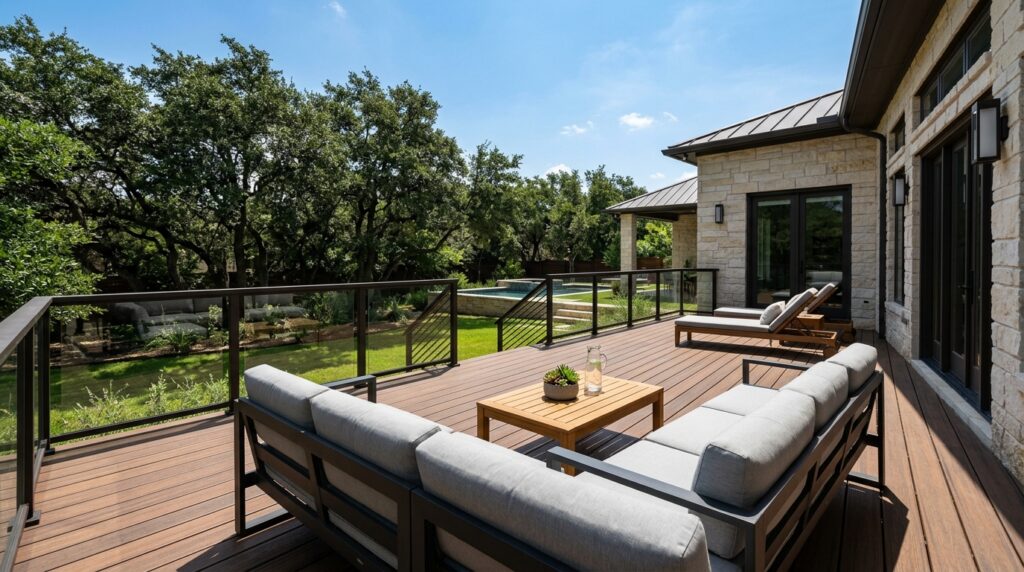
- Screened porch over an existing deck: Many San Antonio homeowners already have a deck and want to convert part or all of it into a screened enclosure, which keeps the existing footprint while adding meaningful weather protection above and around the entire space without a full rebuild from the ground up.
- Freestanding screened structure: Detached from the house, this option works well near a pool or garden and gives homeowners a private retreat that feels genuinely separate from the daily activity happening inside the main house, which many families find appealing for quiet evenings or weekend mornings.
- Combination porch and patio cover: Pairing a screened section with an open patio cover area lets a family enjoy both a fully enclosed space and a more casual, open-air section within the same backyard footprint, giving them flexibility depending on the weather or the size of the gathering that day.
Screen Options: Choosing the Right Screening System
Not all screen materials perform the same way in Texas heat and weather. Choosing the right screen affects durability, visibility, airflow, and how much maintenance the porch requires over time. A knowledgeable builder will walk through these tradeoffs before recommending a specific screening system for your porch, since the right choice depends heavily on sun exposure and household needs.
- Standard fiberglass screen: This traditional screen option balances affordability with solid airflow and visibility, making it a dependable choice for most residential screened-in porch projects across San Antonio and the surrounding suburban neighborhoods where budgets and household expectations vary quite a bit from home to home.
- Solar screen mesh: Designed to reduce UV exposure and block a portion of incoming heat, this option helps keep the enclosed space noticeably cooler during peak summer months while still allowing a clear, unobstructed view of the yard beyond, which many homeowners prefer over darker or more opaque alternatives.
- Pet-resistant screening: Homes with dogs or cats benefit from heavier-gauge screen material that resists tearing and scratching far better than standard mesh, which helps the enclosure hold up over years of daily household use instead of needing frequent patchwork repairs near the base of the frame.
- Retractable screen panels: These allow homeowners to open the porch completely during mild weather and screen it in fully once bugs or heat become a factor, offering a level of flexibility that fixed screening simply cannot match throughout the changing seasons in Central Texas.
- No-see-um mesh: A tighter weave than standard screen, this option keeps out gnats and other tiny insects common near creeks and greenbelts throughout the San Antonio area, particularly during the humid evening hours when standard mesh sometimes still lets smaller pests through.
Furnishing and Decorating Your Screened Porch
Once the structure and screening are in place, furniture and decor choices determine how the room actually gets used day to day. Because a screened porch sits between fully indoor and fully outdoor conditions, materials need to handle humidity and temperature swings better than typical indoor pieces while still feeling like part of the home.
- Weather-resistant seating: Wicker, teak, and powder-coated aluminum outdoor furniture holds up well in a screened environment, resisting the humidity and temperature shifts that can warp or fade indoor-only pieces after just a season or two of exposure to Texas heat and moisture.
- Layered outdoor rugs: A durable outdoor rug adds warmth and defines the seating area, helping the porch feel like a true extension of the home’s interior decor rather than an afterthought space tacked onto the back of the house without much thought or planning involved.
- Ceiling fans for airflow: Installing a fan rated for damp or outdoor locations keeps air moving through the screened area, which matters most during the shoulder seasons when the porch tends to see its heaviest daily use from every member of the household throughout the year.
- Functional lighting: String lights, lanterns, or a flush-mount fixture extend usable hours into the evening, turning the porch into a space for dinner or quiet conversation long after the sun goes down each night rather than a room that only works during the day.
- Storage for cushions and accessories: A small bench or cabinet keeps throw pillows and blankets protected during storms, preserving the room’s decor without hauling everything back indoors every single time unpredictable Texas weather rolls through the area with little to no advance warning at all.
Screened Porch vs. Sunroom vs. Patio Cover: Which Is Right for You
Homeowners often compare a screened porch against a sunroom or an open patio cover before deciding which structure fits their yard and priorities. Each option serves a different purpose, and understanding the practical distinctions between them helps clarify which addition makes the most sense for a given home and how the family actually spends time outside.
A sunroom uses glass or vinyl windows instead of screening, creating a fully enclosed, climate-controllable room that can be used year-round regardless of outdoor temperature. A screened porch, by contrast, stays open to fresh air and breezes, which many San Antonio homeowners prefer for that connected, outdoor feel without the bug and glare problems of a completely open patio.
An open patio cover offers shade with no enclosure at all, making it the simplest structure but also the one most exposed to insects, pollen, and wind-driven rain. For homeowners who want airflow without giving up protection from bugs and sun, a screened enclosure tends to strike the best balance between an open patio and a fully sealed sunroom.
Combining a Screened Porch with Your Deck or Patio
Many of the most functional outdoor spaces in San Antonio combine a screened-in porch with an adjoining open deck or patio area. This layout gives a household the best of both settings without forcing a single structure to handle every use case a family might need throughout the year, from quiet mornings to larger gatherings.
A screened-in deck section can house dining and lounge furniture protected from bugs and sun, while an adjacent open patio area stays available for grilling, a fire pit, or activities that work better without screening overhead. This screened deck arrangement also allows the enclosed portion to stay cooler and cleaner while the open patio handles messier outdoor tasks.
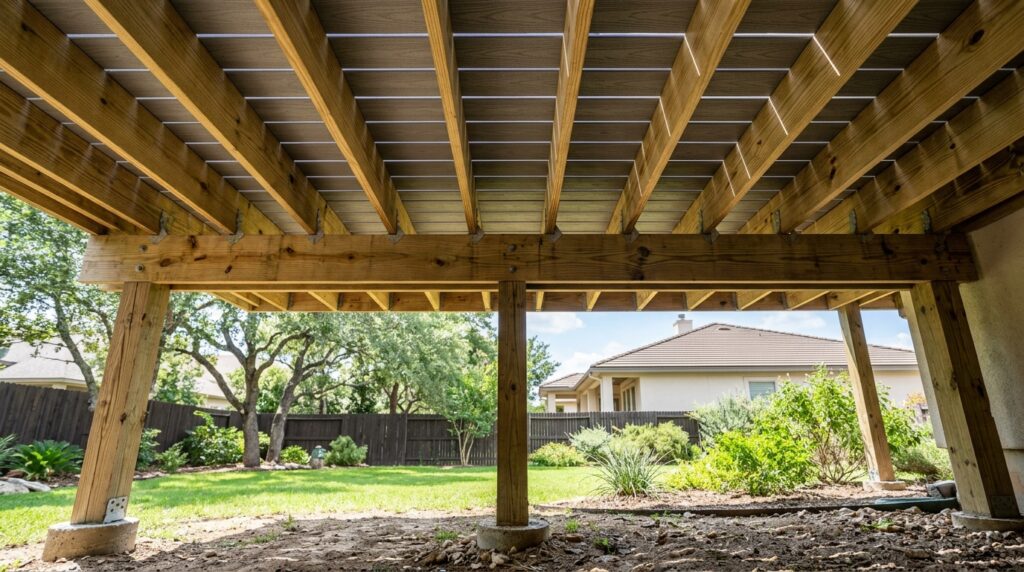
For homeowners converting part of an existing deck into an enclosed deck space, a builder needs to evaluate the current decking material, structural framing, and roofline before adding screen walls and a ceiling. Composite and wood decking both support screened conversions, though the approach to fastening screen frames differs slightly between the two materials.
What a Screened Porch Build Actually Involves
A screened-in porch is more than screen panels stapled to a frame. The project usually starts with an on-site look at the yard, the home’s existing rooflines, and how the family plans to use the finished space, since those details shape everything from footing placement to which direction the screening should face relative to the sun.
From there, the design has to account for sun exposure, drainage, and how the new structure ties into the roof before any framing or screening goes up. Because these projects often involve ceiling fans, outdoor lighting, and occasionally plumbing for a nearby outdoor kitchen, it helps to work with a contractor who can handle electrical and framing work under one roof rather than juggling several separate subcontractors.
Local experience also matters more than it might seem. San Antonio’s clay soil, permitting requirements, and storm patterns all factor into how a porch is framed and anchored, and a builder who has worked across the region, from San Antonio out to New Braunfels and San Marcos, will usually have already run into most of the variables a given lot can throw at a project.
Prestige Deck Builders of San Antonio has built decks, pergolas, and outdoor structures across the area for more than 20 years, and that same crew, including licensed electricians and plumbers on staff, now handles screened porch additions using the same process.
Factors That Shape Your Screened Porch Design
Every screened-in porch project looks a little different once the specifics of a home come into play. Lot orientation, existing rooflines, and how a family plans to use the room all influence the final layout far more than any single trend or catalog photo, which is why a cookie-cutter approach rarely produces the best result.
- Sun exposure and orientation: A porch facing west typically needs denser solar screen material to manage afternoon glare, while a north-facing porch can often use standard screening since it receives noticeably less direct sun throughout the entire day, which affects both comfort and long-term screen durability.
- Existing roofline and structure: Homes with an existing patio cover or deck roof may only need screen walls added, while homes without any overhead structure at all require a full roof addition before screening can even go up, which adds time and planning to the project.
- Intended use of the space: A porch meant for quiet reading and morning coffee can stay fairly compact, while a space meant to host dinners or a television setup needs enough square footage for both comfortable seating and a dedicated activity area without ever feeling cramped or crowded.
- Local drainage and soil conditions: San Antonio’s clay-heavy soil and occasional heavy rain events mean footings and drainage planning matter just as much as the visible screen and framing work happening above ground level, especially on lots with limited natural slope or poor overall runoff conditions.
- HOA and neighborhood guidelines: Some San Antonio-area neighborhoods have specific rules about exterior structure height, materials, or visibility from the street, so checking those guidelines early on helps avoid costly design changes mid-project once construction on the new porch is already well underway and harder to adjust.
Working through these factors with an experienced builder early in the process helps set realistic expectations for scope and timeline before any construction begins.
Maintaining Your Screened-In Porch Year-Round
A screened porch requires less upkeep than a fully open patio, but a few routine habits keep the space looking and functioning well through every Texas season. Regular attention to the screen material, framing, and furniture protects the investment and keeps small issues from turning into larger repairs down the road.
- Rinse screens periodically: Pollen and dust build up on screen mesh over time, and a gentle rinse with a garden hose a few times a year keeps airflow and visibility clear without damaging the underlying screen material or the frame it’s attached to.
- Inspect for tears after storms: High winds and hail common to South Texas storm season can stress screen panels, so a quick visual check after severe weather catches small tears early, before they widen into larger and considerably more costly repairs later in the season.
- Clean gutters and rooflines: If the screened porch sits under its own roof section, keeping gutters clear prevents water from pooling near the frame and causing long-term moisture damage to the surrounding structure, framing, and any nearby wood trim or fascia boards over time.
- Rotate and cover furniture seasonally: Moving cushions and rugs to a covered spot before extended vacant periods helps prevent fading and moisture buildup, particularly during the most humid stretches of late summer weather, when mildew and mold tend to form quickly on fabric and wood surfaces alike.
- Schedule a professional check-up: An annual inspection of the frame, fasteners, and screen tension helps catch minor issues, such as a loosening panel or a small gap at the frame edge, before they turn into bigger, considerably more expensive problems to deal with down the road.
Frequently Asked Questions About Screened Porches
Homeowners researching screened in porch ideas tend to ask similar questions before starting a project, especially once they start comparing screening systems, layouts, and how a porch might tie into an existing deck or patio. The answers below address the concerns that come up most often during early planning conversations.
Can a small screened porch still feel comfortable?
Yes. A small screened porch can work well for a couple or a smaller household, especially when furniture is chosen to match the footprint rather than crowding the room. A compact bistro table and two chairs, paired with a ceiling fan, often makes better use of a tight space than trying to fit oversized furniture meant for a larger room.
Is a screened porch better than a sunroom for a San Antonio home?
It depends on how the family plans to use the space. A sunroom offers year-round climate control, while a screened porch favors airflow and a closer connection to the outdoors. Many homeowners in the region prefer the screened option specifically because it keeps the space feeling like part of the yard rather than an extension of climate-controlled indoor square footage.
Can an existing patio be converted into a screened room?
In many cases, yes, provided the existing patio has a solid roof structure or one can be added. The process involves evaluating the current slab, roofline, and support posts before framing in screen walls, and it often runs faster than a full new-build project since the foundation already exists.
Does a screened porch need its own roof?
A screened porch needs overhead protection of some kind, whether that is an existing patio cover, a new roof extension, or a structure built specifically for the space. Without a roof, screening alone will not keep out rain or provide meaningful shade during peak sun hours.
Bringing Your Screened Porch Ideas to Life
A screened-in porch adds one of the most versatile rooms a San Antonio home can gain, offering shade, bug protection, and comfortable outdoor living without the cost of a fully enclosed sunroom. Whether the goal is a small reading nook or a full wraparound design connected to an existing deck, the right screening system and a few thoughtful furniture choices make the space usable through nearly every season.
For homeowners weighing a screened porch against other shade options, it’s worth browsing a few related ideas first, whether that’s pergolas and other outdoor structures, a patio cover, or pairing the porch with new wood or composite decking. The pergola gallery is also a good place to see how similar structures have turned out on other San Antonio properties.
Whoever ends up handling the build, a little upfront planning around sun exposure, roofline, and how the space will actually be used goes a long way toward a screened porch that gets used year-round instead of one that looks good in photos and sits empty.