San Antonio summers put outdoor living spaces to the test, and not every decking product can handle the sun, humidity, and temperature swings that define our region. Homeowners want a deck that looks great year after year without constant sanding, staining, or repairs. At Prestige Deck Builders, we spend a lot of time talking with local families about which options actually hold up here, and this guide covers what we’ve learned.
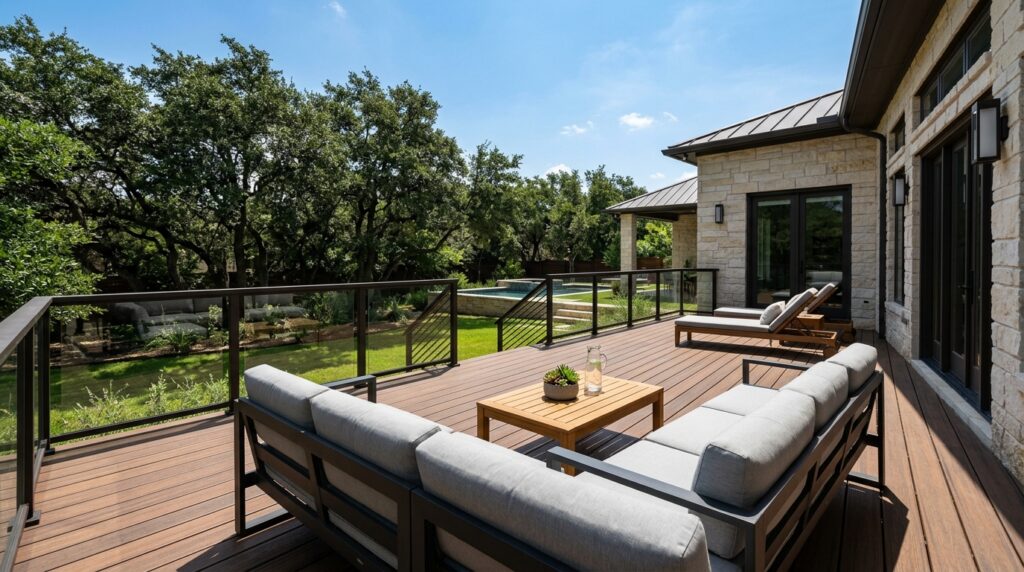
Extreme heat, intense UV exposure, and sudden rainstorms create a uniquely demanding environment for exterior structures. A deck that isn’t built with the right product can warp, fade, splinter, or crack within just a few seasons. Choosing decking designed to withstand these conditions protects your investment and keeps your backyard usable for entertaining, relaxing, and everyday family life.
Natural wood decking struggles the most in this climate. Constant sun exposure dries out wood fibers, while humidity swings cause planks to expand and contract repeatedly. That cycle accelerates cracking, splintering, and graying, which means homeowners end up sanding, staining, or sealing far more often than they expected when they first built their deck.
Easy-care decking materials were developed specifically to solve these problems. They resist moisture absorption, hold their color longer under UV exposure, and require little more than occasional cleaning to stay looking new. For San Antonio homeowners, that translates directly into more time enjoying their space and less time working on it.
Composite decking has become the leading low maintenance deck choice for homeowners across San Antonio, and it’s the material we get asked about most often on site visits. It’s manufactured from a blend of wood fibers and recycled plastics, creating planks that combine the natural look of wood with the durability of synthetic construction. The combination makes composite decking one of the most reliable choices for hot, humid climates.
Composite decking is designed to resist the fading, staining, and moisture damage that plague traditional lumber. Many composite planks also feature a capped outer layer, which adds an extra shield against sun exposure and everyday wear. Well-known brands such as Trex, Envision composite decking, and NewTechWood UltraShield each offer product lines engineered for long-term performance in demanding conditions.
Homeowners choosing composite decking benefit in several ways:
For homeowners who want maximum protection from moisture, PVC decking offers a completely synthetic alternative to composite planks. Unlike composite decking, which blends wood fibers with plastic, PVC contains no organic content at all. It’s one of the most moisture-resistant decking option choices available for San Antonio properties near pools, hot tubs, or areas with heavy irrigation.
Because PVC contains no wood fibers, it carries virtually no risk of rot, mold, or insect damage. That’s a meaningful advantage in a region where humidity and heat can create favorable conditions for organic decay in natural wood. Some PVC planks also feel cooler underfoot compared to certain composite options, which matters when temperatures climb during peak summer months.
PVC tends to appeal most to homeowners who want the strongest possible moisture protection, and it’s often what we suggest for pool decks specifically, particularly around water features and in areas that receive constant sun exposure throughout the day.
Vinyl decking is another synthetic choice worth considering for homeowners prioritizing simplicity above all else. It shares some similarities with PVC in that it resists moisture, insects, and rot far better than natural wood. Vinyl also tends to be one of the easiest surfaces to clean, often requiring nothing more than a garden hose and mild detergent.
One consideration with vinyl involves its appearance. While manufacturers have improved wood-grain textures and color options significantly over the years, some homeowners still find it less natural-looking than premium composite planks. For those who prioritize function and minimal upkeep over a wood-like aesthetic, vinyl remains a practical choice within the broader easy-care decking materials category.
Comparing composite decking to traditional wood highlights exactly why so many San Antonio homeowners are making the switch. Classic lumber, including cedar, pine, and pressure-treated wood, offers a familiar look and a familiar building process. However, it demands consistent care to survive our climate, including annual staining, sealing, and periodic plank replacement due to sun and moisture damage.
Composite decking flips that equation by shifting the work upfront into the manufacturing process rather than onto the homeowner’s yearly to-do list. Homeowners avoid the unpredictability of grain, knots, and warping that can affect the finished appearance of a lumber deck, trading that variability for a consistent, engineered product.
Premium hardwoods like Ipe present a middle ground worth mentioning. This dense, naturally rot- and insect-resistant wood is more durable than standard lumber. Even so, it still requires periodic oiling to maintain its color, placing it closer to conventional decking in terms of ongoing upkeep compared to composite or PVC.
Selecting the right product depends on how you plan to use your deck and how much time you want to dedicate to upkeep. When we sit down with homeowners to talk through this decision, a family that entertains frequently near a pool may prioritize the moisture resistance of PVC, while a homeowner focused on natural aesthetics might lean toward premium composite planks designed to mimic real wood grain.
Beyond the decking surface itself, a complete backyard project often includes complementary elements. Guardrail systems, whether aluminum, composite, or cable, should match the durability profile of your decking to avoid mismatched maintenance schedules. Metal railing tends to resist rust and corrosion well in humid conditions, making it a practical pairing for a low-upkeep deck.
Homeowners renovating their space sometimes also consider how decking choices relate to nearby siding or exterior finishes. Coordinating colors and textures between your deck and the rest of the home creates a more cohesive look for the entire property, while ensuring each product is suited to withstand San Antonio’s specific climate challenges.
A few practical questions can help guide the decision:
Color choice plays a bigger role in deck performance than many homeowners expect, especially in a market with as much direct sun as ours. Darker composite and PVC planks tend to absorb more heat during peak afternoon hours, which can make bare feet uncomfortable on the hottest days of summer. Lighter and mid-tone finishes generally stay cooler underfoot while still offering the rich, natural wood-look appearance homeowners want from modern decking.
Beyond comfort, color also affects how a deck ages over time. Manufacturers formulate today’s composite and PVC planks with UV-resistant pigments designed to hold their tone far longer than older generations of synthetic decking. Even so, choosing a shade suited to your yard’s sun exposure, whether that’s a shaded space under mature oak trees or a wide-open area with little afternoon shade, helps the finished deck look its best for longer.
Texture matters just as much as color when it comes to comfort and safety. Many composite planks now include grip-enhanced surfaces that stay slip-resistant even when wet, which is a practical consideration for decks near pools or in areas that see regular rain. Homeowners weighing composite decking against other synthetic choices should ask about available textures and finishes, since the options have expanded considerably compared to the limited wood-grain patterns available years ago.
Even the most durable decking benefits from a bit of routine attention, and it’s a point we make with every homeowner at handoff, even though that attention looks nothing like the sanding and sealing a wood deck requires. A simple rinse with a garden hose every few weeks helps clear pollen, dust, and debris before it has a chance to build up on the surface of composite or PVC planks. For tougher grime, a soft-bristle brush with mild soap and water is usually all that’s needed to restore a clean, like-new appearance.
Gutters and nearby trees deserve some attention as well, since fallen leaves and standing water can create surface staining if left sitting on composite planks for extended periods. Keeping the surface clear of debris, particularly after storms common during Texas spring weather, helps preserve the finish and prevents organic matter from settling into plank grooves or fastener channels.
Seasonal changes bring their own considerations. Intense summer heat can cause planks to expand slightly, which is a normal characteristic of composite and PVC boards and one reason professional installation matters, since proper spacing accounts for this natural movement. Cooler winter nights bring the opposite effect, with slight contraction that a well-installed deck is designed to handle without issue. Homeowners who have their deck professionally installed with manufacturer-recommended spacing and fasteners typically find that seasonal expansion and contraction never becomes a visible or structural problem.
Routine care also extends to structural components beyond the decking surface. A guardrail system generally needs little more than an occasional wipe-down, and checking fasteners and connection points once or twice a year, ideally as part of a broader deck inspection, helps catch small issues before they become bigger repairs.
Reading about decking products only goes so far — seeing them installed makes the decision much easier. Our photo gallery showcases completed deck projects around San Antonio, giving homeowners a realistic sense of how different colors, styles, and materials look once they’re actually part of a backyard rather than a sample plank in a showroom.
Browsing finished decks also helps with visualizing layout options before committing to a specific product or design. It’s a useful step for anyone still weighing composite decking against other choices for their property.
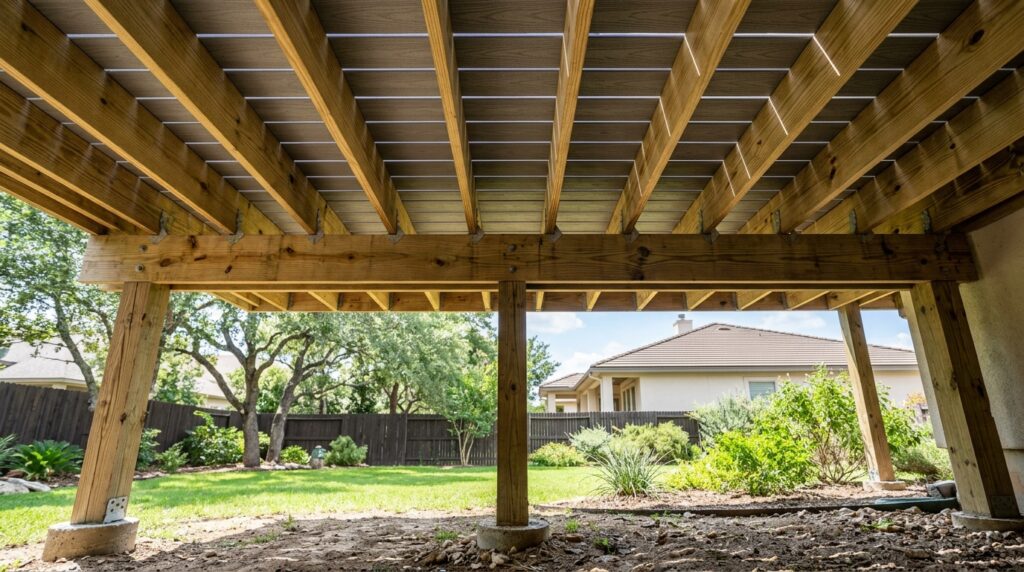
Picking the right product is only part of building a deck that lasts. Proper installation affects how well any decking material performs over time — even the best composite or PVC planks can underperform if shortcuts during installation affect drainage, ventilation, or structural support underneath the deck surface.
At Prestige Deck Builders, we’ve been building decks throughout San Antonio, New Braunfels, and San Marcos for more than 20 years, and as a veteran-owned company, we bring the same attention to detail to every project regardless of size. Because our team includes licensed electricians and plumbers, we’re also equipped to handle decks that involve lighting, outdoor kitchens, or water features requiring code-compliant installation — details that matter as much as the decking itself.
Whether you’re weighing composite decking, PVC, vinyl, or exploring premium hardwood or porcelain/engineered stone deck systems, the product is only half the equation. The other half is having a team on the ground here in Texas that understands how these options actually perform once the heat sets in.
Copyright © 2026 Prestige Deck Builder. All rights reserved.