Choosing the right railing transforms an ordinary deck into a standout feature of your home. Homeowners across San Antonio are exploring fresh deck railing ideas that blend safety, style, and durability in the Texas Hill Country climate. This guide walks through the most popular railing materials, designs, and details to help you plan a deck that fits your home and lifestyle.
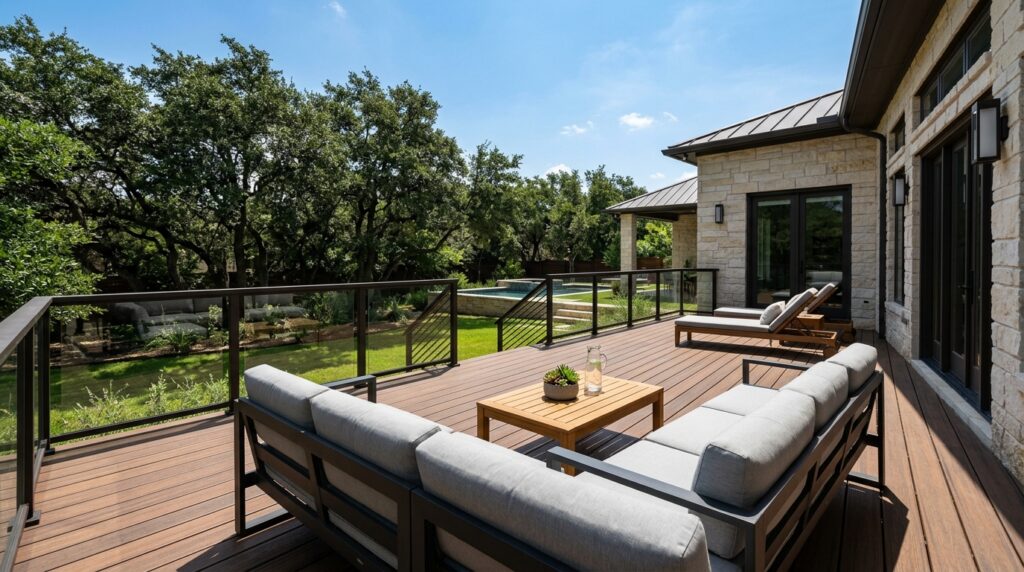
A deck railing does far more than meet code requirements. It frames the outdoor living space, ties the deck visually to the rest of the house, and protects family members and guests from accidental falls. Homeowners who invest thought into their railing design often see a noticeable boost in curb appeal and overall property value.
San Antonio’s intense summer heat, occasional freezes, and humidity swings put real stress on outdoor materials. A railing that looks great on day one but warps, rusts, or fades within a year creates ongoing headaches. Selecting the right combination of material and design upfront helps homeowners avoid premature repairs and keeps the deck looking sharp for years.
Beyond durability, railing design shapes how a deck feels to use. A solid privacy-style railing creates a cozy, enclosed feel perfect for quiet evenings. An open cable or glass railing keeps sightlines clear, which works well for decks overlooking a pool, garden, or hillside view. Thinking through how the space will be used helps narrow down which railing ideas make the most sense.
Wood deck railing remains a favorite among San Antonio homeowners who want a warm, traditional look that complements brick, stucco, or stone exteriors. Cedar and pressure-treated pine are common choices because both hold up reasonably well outdoors when properly sealed and maintained on a regular schedule.
Traditional wood railing designs typically feature evenly spaced vertical balusters between a top and bottom rail, though homeowners increasingly request custom spacing or decorative baluster patterns. Some popular wood railing variations include:
Wood railing does require periodic staining or sealing to resist the sun and moisture common in South Texas. Homeowners who choose wood should plan for routine maintenance to preserve both the appearance and structural integrity of the railing over time.
Modern deck railing has grown steadily in popularity among San Antonio homeowners building or renovating contemporary-style homes. These designs favor clean lines, minimal ornamentation, and materials that emphasize openness rather than the traditional picket-and-post look.
Horizontal railing designs represent one of the most requested contemporary railing styles right now. Instead of vertical balusters, sleek rails or cables run parallel to the deck surface, creating a linear appearance that pairs beautifully with contemporary architecture, flat roof lines, and large glass windows. This design also tends to make a deck feel wider and more expansive, since the eye follows the rail lines outward rather than being interrupted by vertical posts.
Popular modern railing styles include:
Modern railing styles generally require less routine maintenance than painted or stained wood, since metal, aluminum, and glass hold up well against sun exposure and temperature swings without needing to be refinished every few years.
Cable railing has become one of the most requested deck railing upgrades for San Antonio homes with a view worth showing off. Instead of traditional balusters, tensioned stainless steel cables run between posts in a linear pattern, creating a nearly transparent barrier that still meets safety and code requirements.
The appeal of a cable rail system goes beyond aesthetics. Because the cables are thin and reflective rather than solid, they visually disappear from a distance, making a deck feel larger and more connected to the surrounding landscape. This makes cable railing especially popular for elevated decks, hillside properties, and homes backing up to greenbelts or golf courses around San Antonio.
Stainless steel cable resists rust and corrosion far better than standard steel, which matters given the area’s humidity and heat. Most cable rail systems use tensioned cables strung between sturdy end posts, though vertical cable configurations are also available for homeowners who prefer that look. Maintenance is relatively minimal, generally limited to occasional cleaning and periodic tension checks to keep the cables taut and secure.
Cable railing installation involves more specialized tensioning hardware and labor than basic wood picket railing, since the cables must be properly tensioned and secured to perform safely over time. Many homeowners find the process worthwhile given the dramatic view and low ongoing maintenance the system provides.
Metal railing, particularly aluminum, has earned a strong reputation among San Antonio homeowners for its combination of strength, low maintenance, and design flexibility. Unlike wood, aluminum railing will not rot, warp, or attract termites, which makes it a practical long-term choice for a climate that cycles between intense heat and occasional freezes.
Aluminum railing comes in a wide range of styles, from traditional picket designs to sleek linear configurations that mimic the look of cable or glass with far less ongoing maintenance. Powder-coated finishes in black, bronze, or white allow homeowners to match their railing to their home’s existing color palette without worrying about paint chipping or fading prematurely.
Wrought iron style railing, often made from aluminum to reduce weight and rust risk, remains popular for homeowners who want a more traditional, ornate look. Decorative scrollwork, finials, and curved top rails can all be incorporated into a metal railing design while still meeting the structural requirements of a safe deck railing system.
One practical advantage of metal railing is its compatibility with nearly any decking material, whether that is natural wood, composite, or even a paver surface. Because metal posts and balusters are typically installed independently of the decking boards, homeowners have more flexibility when mixing and matching railing style with deck surface material.
Glass railing offers one of the most dramatic ways to open up a deck’s sightlines while still providing a fully enclosed safety barrier. Tempered glass panels, set into either a metal or composite frame, create a nearly invisible wall that lets views of the yard, pool, or landscape shine through uninterrupted.
This railing style works particularly well for decks near swimming pools, since the solid glass panel prevents small children or pets from squeezing through gaps that vertical balusters might otherwise leave. Glass panels also block wind more effectively than open cable or baluster designs, which can make an elevated deck more comfortable to use on breezy days.
Glass railing does require more frequent cleaning than metal or cable systems, since fingerprints, water spots, and pollen tend to show up more visibly on a clear surface. Homeowners who choose glass should plan for periodic wipe-downs to keep the panels looking their best, particularly during high-pollen seasons common in Central Texas.
Deciding between horizontal and vertical railing designs often comes down to the architectural style of the home and the look a homeowner wants to achieve. Both configurations meet standard safety codes when properly installed, so the choice largely comes down to aesthetics and personal preference.
This railing style, whether built from cable, metal, or wood, tends to suit modern and contemporary homes with clean architectural lines. The horizontal orientation draws the eye outward, making decks feel wider and more connected to the landscape beyond. This style has grown especially popular among newer builds and renovations throughout the San Antonio area.
Vertical railing designs, including traditional picket and baluster patterns, remain the more common choice for classic, craftsman, and traditional-style homes. The vertical lines echo porch columns, window trim, and other architectural elements typically found on these home styles. This orientation also tends to comply more universally with certain HOA guidelines that specifically restrict linear rail configurations, so it is worth checking any neighborhood requirements before finalizing a design.
Selecting the right railing material means balancing appearance with how well that material performs under San Antonio’s specific weather conditions. Summers bring long stretches of intense heat and UV exposure, while winter occasionally delivers a hard freeze that can stress certain materials more than others.
Wood railing offers warmth and affordability but requires the most ongoing maintenance, including regular staining or sealing to prevent sun damage and moisture infiltration. Composite and PVC railing materials resist fading, cracking, and rotting far better than natural wood, making them a strong choice for homeowners who want a low-maintenance alternative that still resembles traditional railing styles.
Aluminum and other metal railing materials hold up exceptionally well against heat and humidity, resisting rust when properly coated and requiring little more than occasional cleaning. Glass and cable systems, while more of an investment upfront, tend to need the least structural maintenance over time since there is no wood to rot or paint to chip.
Ultimately, the right railing material depends on how much maintenance a homeowner is willing to take on, the architectural style of the home, and the specific look they want the finished deck to achieve.
Balusters, the vertical (or in some designs, horizontal) supports between the top and bottom rail, play a major role in both the safety and appearance of a deck railing. Building codes typically require baluster spacing that prevents a 4-inch sphere from passing through, a standard designed to keep young children safe on elevated decks.
Beyond the code requirement, baluster style offers plenty of room for customization. Square wood balusters deliver a classic, straightforward look, while turned or decorative balusters add visual texture for homeowners who want a more traditional or ornate appearance. Metal balusters, whether straight or scrolled, tend to create a more contemporary or wrought-iron-inspired look depending on the finish selected.
Composite balusters have grown in popularity because they combine the classic vertical baluster look with the low-maintenance benefits of composite materials. These balusters resist splintering, fading, and moisture damage while still delivering the traditional appearance many homeowners prefer for their deck railing.

Composite railing has become a serious competitor to traditional wood for homeowners who want the classic railing look without the ongoing maintenance demands. Made from a blend of wood fibers and recycled plastic, composite railing resists rot, insect damage, and fading far better than natural wood over the long term.
Wood railing still holds appeal for homeowners who value natural grain texture and the ability to stain or paint the railing to match evolving design preferences. However, wood requires more frequent upkeep, including sanding, sealing, and occasional board replacement due to weather exposure or insect damage.
Composite railing generally requires more material to install initially, but tends to save homeowners time and effort over the life of the deck since it does not need to be refinished on a regular schedule. Homeowners weighing composite against wood should consider how much time they are willing to invest in ongoing maintenance versus a lower-upkeep material.
Deck stair railing deserves just as much design attention as the main deck railing, since it is often the first element visitors notice when approaching a home. Matching the stair railing style to the main deck creates a cohesive, professional look rather than a mismatched patchwork of materials and designs.
Front porch railing, meanwhile, tends to favor slightly more traditional and welcoming designs, since porches are typically the primary entry point to a home. Wood or composite railing with classic baluster spacing often suits a front porch better than a stark modern cable or glass system, though homeowners with contemporary home designs may still prefer a sleeker look that matches their architecture.
Handrails along stairs also need to meet specific grip and height requirements, particularly for taller staircases connecting a deck to the ground level. Working with an experienced deck builder helps ensure stair railing and handrails meet all applicable safety codes while still achieving the desired look.
Adding lighting to a deck railing enhances both safety and ambiance, particularly for homeowners who use their outdoor space in the evening. Post cap lights, mounted directly on top of railing posts, provide a subtle glow that outlines the deck’s perimeter without overwhelming the space with brightness.
Rail-mounted LED strip lighting offers another popular option, running along the underside of the top rail to cast a soft downward glow across the deck surface. This type of lighting works particularly well with modern railing designs, since the clean lines of cable or metal railing complement the linear look of strip lighting.
Solar-powered post cap lights have grown in popularity because they eliminate the need for additional wiring, making them a straightforward addition to an existing deck railing. Homeowners planning a new deck from scratch have more flexibility to incorporate hardwired lighting options directly into the railing design during the building process.
Selecting the right railing style is only half the equation. Proper installation determines whether that railing performs safely and looks great for years to come. Prestige Deck Builders of San Antonio brings more than 20 years of hands-on experience to every project, helping homeowners throughout San Antonio, New Braunfels, and San Marcos choose and install the right railing system for their home.
As a veteran-owned company, Prestige Deck Builders of San Antonio understands the value of discipline, attention to detail, and clear communication throughout every project. The team includes licensed electricians and plumbers on staff, which proves especially valuable for homeowners incorporating deck lighting, outdoor kitchens, or other utility connections into their railing and deck design.
Whether you are drawn to classic wood railing, sleek cable systems, or contemporary linear aluminum designs, working with an experienced local builder ensures your railing meets code, withstands the local climate, and reflects your home’s unique style.
Cable and linear metal railing designs have seen significant growth in popularity among homeowners seeking a contemporary railing look, while traditional wood and composite railing remain strong choices for classic and craftsman-style homes.
Most building codes require baluster spacing that prevents a 4-inch sphere from passing through the gap, a standard designed primarily to protect young children on elevated decks.
Composite railing generally resists rot, fading, and insect damage better than natural wood, which typically translates into less frequent sanding, staining, and board replacement over the life of the deck.
Yes, many homeowners combine materials, such as a wood cap rail over metal balusters or a composite base with cable infill, to balance aesthetics, durability, and maintenance requirements.
From classic wood designs to sleek modern cable systems, the right deck railing ties your entire outdoor living space together. Prestige Deck Builders of San Antonio is ready to help homeowners throughout the San Antonio area bring their deck railing ideas to life with quality craftsmanship built to last.
Prestige Deck Builders of San Antonio 8546 Broadway Suite 108, San Antonio, TX 78217 (210) 387-1286 prestigedeckbuilder.com
Copyright © 2026 Prestige Deck Builder. All rights reserved.